Global Certificate Course in Sustainable Aquatic Systems
-- viewing now3,495+
Students enrolled
GBP £ 140
GBP £ 202
Save 44% with our special offer
About this course
100% online
Learn from anywhere
Shareable certificate
Add to your LinkedIn profile
2 months to complete
at 2-3 hours a week
Start anytime
No waiting period
Course details
• Introduction to Sustainable Aquatic Systems
• Aquatic Ecosystem Health and Biodiversity
• Sustainable Aquaculture Practices and Technologies
• Water Quality Management and Pollution Control in Aquatic Systems
• Fisheries Management and Conservation
• Climate Change Impacts on Aquatic Ecosystems
• Integrated Multi-Trophic Aquaculture (IMTA)
• Policy and Governance for Sustainable Aquatic Systems
• Aquatic Ecosystem Health and Biodiversity
• Sustainable Aquaculture Practices and Technologies
• Water Quality Management and Pollution Control in Aquatic Systems
• Fisheries Management and Conservation
• Climate Change Impacts on Aquatic Ecosystems
• Integrated Multi-Trophic Aquaculture (IMTA)
• Policy and Governance for Sustainable Aquatic Systems
Career path
| Career Role | Description |
|---|---|
| Aquaculture Technician (Sustainable Fisheries) | Responsible for the day-to-day operations of sustainable aquaculture farms, monitoring fish health and water quality. High demand due to growing global need for sustainable seafood. |
| Marine Conservation Officer (Sustainable Aquatic Environments) | Works to protect and restore marine ecosystems, focusing on biodiversity and sustainable practices. Strong emphasis on policy and community engagement. |
| Sustainable Fisheries Consultant (Fisheries Management) | Advises fishing industries and government agencies on sustainable fishing practices and regulations, ensuring long-term health of fish stocks. |
| Aquatic Ecologist (Environmental Sustainability) | Conducts research on aquatic ecosystems, analyzing their health and identifying threats to biodiversity. Essential for informing conservation efforts. |
| Water Quality Specialist (Aquatic Resource Management) | Monitors and analyzes water quality in aquatic environments, identifying pollution sources and developing solutions to improve water health. Crucial for sustainable aquatic systems. |
Entry requirements
- Basic understanding of the subject matter
- Proficiency in English language
- Computer and internet access
- Basic computer skills
- Dedication to complete the course
No prior formal qualifications required. Course designed for accessibility.
Course status
This course provides practical knowledge and skills for professional development. It is:
- Not accredited by a recognized body
- Not regulated by an authorized institution
- Complementary to formal qualifications
You'll receive a certificate of completion upon successfully finishing the course.
Why people choose us for their career
Loading reviews...
Frequently Asked Questions
Debug: False
Course fee
MOST POPULAR
Fast Track
GBP £140
Complete in 1 month
Accelerated Learning Path
- 3-4 hours per week
- Early certificate delivery
- Open enrollment - start anytime
Standard Mode
GBP £90
Complete in 2 months
Flexible Learning Pace
- 2-3 hours per week
- Regular certificate delivery
- Open enrollment - start anytime
What's included in both plans:
- Full course access
- Digital certificate
- Course materials
All-Inclusive Pricing • No hidden fees or additional costs
Get course information
Earn a career certificate
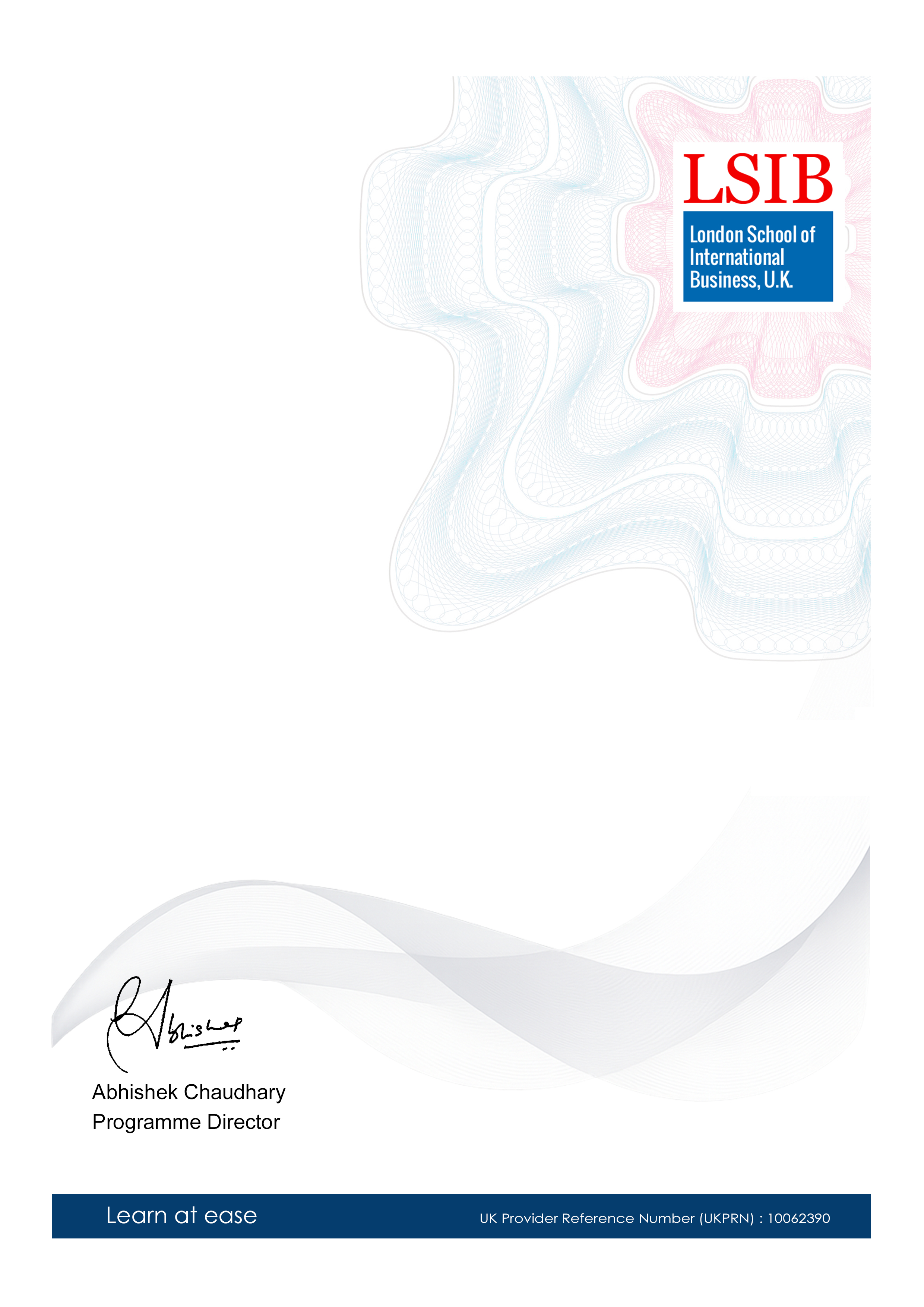
GLOBAL CERTIFICATE COURSE IN SUSTAINABLE AQUATIC SYSTEMS
is awarded to
Learner Name
who has completed a programme at
London School of International Business (LSIB)
Awarded on
05 May 2025
Blockchain Id: s-1-a-2-m-3-p-4-l-5-e
Add this credential to your LinkedIn profile, resume, or CV. Share it on social media and in your performance review.