Graduate Certificate in Virtual Reality for Standing Balance Training post-Stroke
-- viewing now3,549+
Students enrolled
GBP £ 140
GBP £ 202
Save 44% with our special offer
About this course
100% online
Learn from anywhere
Shareable certificate
Add to your LinkedIn profile
2 months to complete
at 2-3 hours a week
Start anytime
No waiting period
Course details
• Introduction to Virtual Reality and its Applications in Rehabilitation
• Neurophysiology of Balance and Post-Stroke Recovery
• Virtual Reality System Design for Balance Training
• 3D Modeling and Game Development for VR Balance Applications
• Sensor Technology and Data Acquisition in VR Balance Training
• Developing Virtual Environments for Standing Balance Training post-Stroke
• Assessment and Outcome Measures in VR-Based Balance Rehabilitation
• Clinical Implementation of VR for Standing Balance Training post-Stroke
• Ethical Considerations and Patient Safety in VR Rehabilitation
• Neurophysiology of Balance and Post-Stroke Recovery
• Virtual Reality System Design for Balance Training
• 3D Modeling and Game Development for VR Balance Applications
• Sensor Technology and Data Acquisition in VR Balance Training
• Developing Virtual Environments for Standing Balance Training post-Stroke
• Assessment and Outcome Measures in VR-Based Balance Rehabilitation
• Clinical Implementation of VR for Standing Balance Training post-Stroke
• Ethical Considerations and Patient Safety in VR Rehabilitation
Career path
| Career Role | Description |
|---|---|
| VR Rehabilitation Specialist (Post-Stroke) | Develop and implement virtual reality-based balance training programs for stroke survivors. Requires expertise in VR technology, rehabilitation principles, and patient assessment. High demand in specialized clinics and hospitals. |
| Virtual Reality Therapist (Balance & Gait) | Utilizes VR technology to design and deliver engaging therapies focused on improving balance and gait in stroke patients. Strong clinical skills and knowledge of neurorehabilitation are essential. |
| VR Game Developer (Medical Applications) | Creates immersive and interactive VR games tailored for balance rehabilitation post-stroke. Requires proficiency in game development and a deep understanding of the needs of stroke patients. Growing market for specialized game development. |
| Data Scientist (VR Rehabilitation Outcomes) | Analyzes data collected from VR balance training programs to assess effectiveness and inform program improvement. Requires strong analytical and programming skills. This role is vital for optimizing VR solutions. |
Entry requirements
- Basic understanding of the subject matter
- Proficiency in English language
- Computer and internet access
- Basic computer skills
- Dedication to complete the course
No prior formal qualifications required. Course designed for accessibility.
Course status
This course provides practical knowledge and skills for professional development. It is:
- Not accredited by a recognized body
- Not regulated by an authorized institution
- Complementary to formal qualifications
You'll receive a certificate of completion upon successfully finishing the course.
Why people choose us for their career
Loading reviews...
Frequently Asked Questions
Debug: False
Course fee
MOST POPULAR
Fast Track
GBP £140
Complete in 1 month
Accelerated Learning Path
- 3-4 hours per week
- Early certificate delivery
- Open enrollment - start anytime
Standard Mode
GBP £90
Complete in 2 months
Flexible Learning Pace
- 2-3 hours per week
- Regular certificate delivery
- Open enrollment - start anytime
What's included in both plans:
- Full course access
- Digital certificate
- Course materials
All-Inclusive Pricing • No hidden fees or additional costs
Get course information
Earn a career certificate
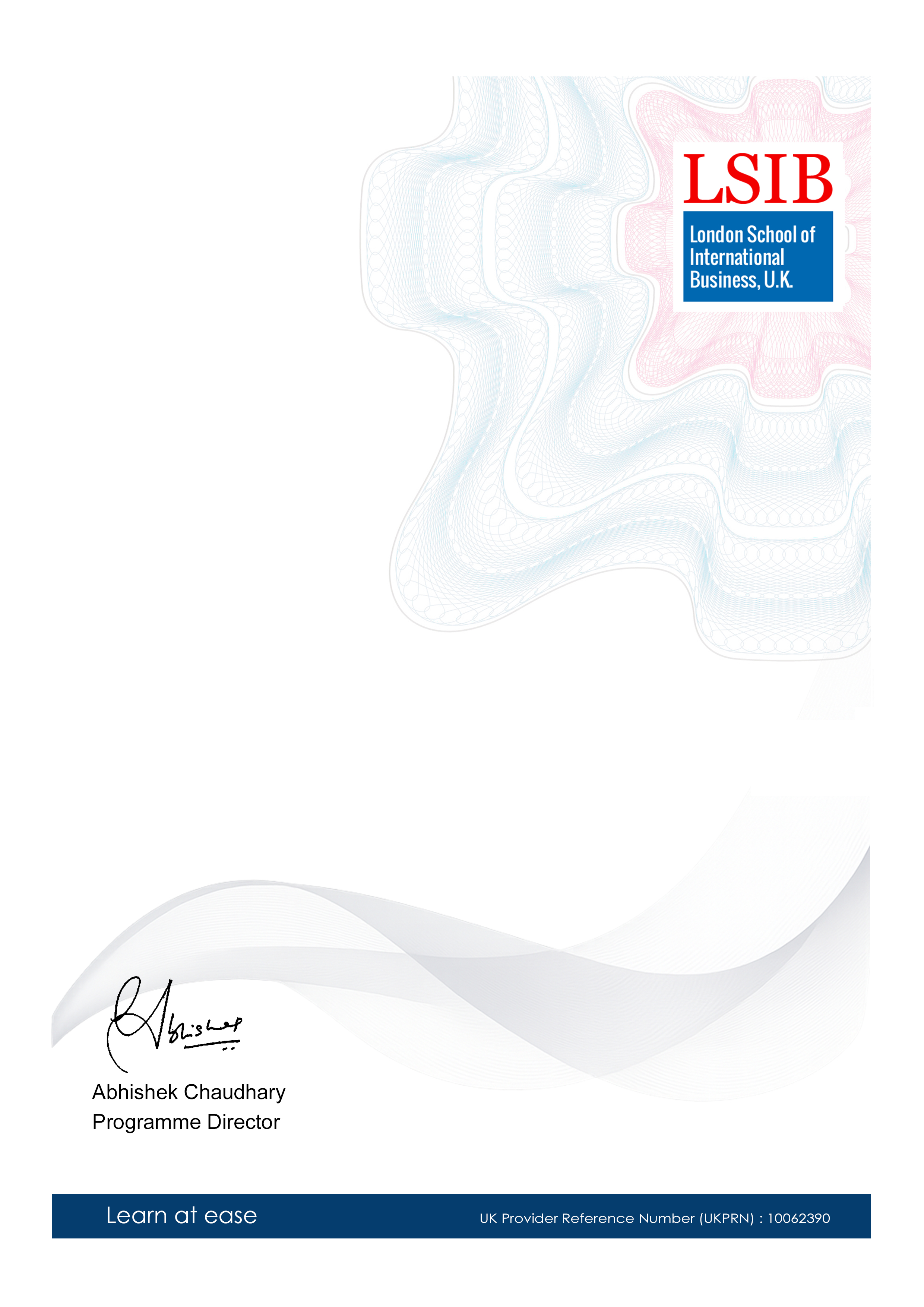
GRADUATE CERTIFICATE IN VIRTUAL REALITY FOR STANDING BALANCE TRAINING POST-STROKE
is awarded to
Learner Name
who has completed a programme at
London School of International Business (LSIB)
Awarded on
05 May 2025
Blockchain Id: s-1-a-2-m-3-p-4-l-5-e
Add this credential to your LinkedIn profile, resume, or CV. Share it on social media and in your performance review.