Postgraduate Certificate in Water Pollution Awareness for Humanitarian Aid Workers
-- viewing now4,155+
Students enrolled
GBP £ 140
GBP £ 202
Save 44% with our special offer
About this course
100% online
Learn from anywhere
Shareable certificate
Add to your LinkedIn profile
2 months to complete
at 2-3 hours a week
Start anytime
No waiting period
Course details
• Water Quality Parameters and Monitoring: Understanding key indicators, sampling techniques, and data analysis relevant to humanitarian contexts.
• Waterborne Diseases and their Prevention: Examining the epidemiology of waterborne illnesses, focusing on transmission routes and effective interventions in emergency settings.
• Sanitation and Hygiene in Emergency Response: Exploring safe sanitation options, hygiene promotion strategies, and the crucial link between water, sanitation, and hygiene (WASH) in humanitarian crises.
• Water Pollution Sources and Impacts: Identifying various sources of water pollution (industrial, agricultural, etc.) and their devastating effects on health and the environment, especially in fragile contexts.
• Water Treatment Technologies for Humanitarian Aid: Evaluating appropriate and sustainable water treatment methods suitable for emergency response, including point-of-use and community-level solutions.
• Water Pollution Awareness and Community Engagement: Strategies for educating communities about water pollution risks and promoting safe water practices.
• Legal and Policy Frameworks for Water Resource Management: Exploring international and national frameworks governing water quality and access, particularly in humanitarian settings.
• Disaster Risk Reduction and Water Resources Management: Integrating water pollution considerations into disaster preparedness and response planning.
• Waterborne Diseases and their Prevention: Examining the epidemiology of waterborne illnesses, focusing on transmission routes and effective interventions in emergency settings.
• Sanitation and Hygiene in Emergency Response: Exploring safe sanitation options, hygiene promotion strategies, and the crucial link between water, sanitation, and hygiene (WASH) in humanitarian crises.
• Water Pollution Sources and Impacts: Identifying various sources of water pollution (industrial, agricultural, etc.) and their devastating effects on health and the environment, especially in fragile contexts.
• Water Treatment Technologies for Humanitarian Aid: Evaluating appropriate and sustainable water treatment methods suitable for emergency response, including point-of-use and community-level solutions.
• Water Pollution Awareness and Community Engagement: Strategies for educating communities about water pollution risks and promoting safe water practices.
• Legal and Policy Frameworks for Water Resource Management: Exploring international and national frameworks governing water quality and access, particularly in humanitarian settings.
• Disaster Risk Reduction and Water Resources Management: Integrating water pollution considerations into disaster preparedness and response planning.
Career path
| Career Role | Description |
|---|---|
| Water Quality Specialist (Humanitarian Aid) | Oversees water purification and sanitation projects in emergency and development contexts, ensuring safe water access. Requires strong water pollution knowledge and experience in humanitarian settings. |
| Environmental Health Officer (International Development) | Monitors environmental hazards, including water pollution, and develops mitigation strategies in crisis-affected areas. Involves fieldwork, community engagement, and report writing. |
| Water Resources Engineer (Disaster Relief) | Designs and implements sustainable water management systems in post-disaster scenarios, addressing water pollution risks and ensuring equitable access to clean water. Requires strong engineering and humanitarian skills. |
| Wastewater Management Consultant (International NGOs) | Provides expert advice on safe wastewater management practices, minimizing water pollution and environmental impact. Works with NGOs and local communities to improve sanitation infrastructure. |
Entry requirements
- Basic understanding of the subject matter
- Proficiency in English language
- Computer and internet access
- Basic computer skills
- Dedication to complete the course
No prior formal qualifications required. Course designed for accessibility.
Course status
This course provides practical knowledge and skills for professional development. It is:
- Not accredited by a recognized body
- Not regulated by an authorized institution
- Complementary to formal qualifications
You'll receive a certificate of completion upon successfully finishing the course.
Why people choose us for their career
Loading reviews...
Frequently Asked Questions
Debug: False
Course fee
MOST POPULAR
Fast Track
GBP £140
Complete in 1 month
Accelerated Learning Path
- 3-4 hours per week
- Early certificate delivery
- Open enrollment - start anytime
Standard Mode
GBP £90
Complete in 2 months
Flexible Learning Pace
- 2-3 hours per week
- Regular certificate delivery
- Open enrollment - start anytime
What's included in both plans:
- Full course access
- Digital certificate
- Course materials
All-Inclusive Pricing • No hidden fees or additional costs
Get course information
Earn a career certificate
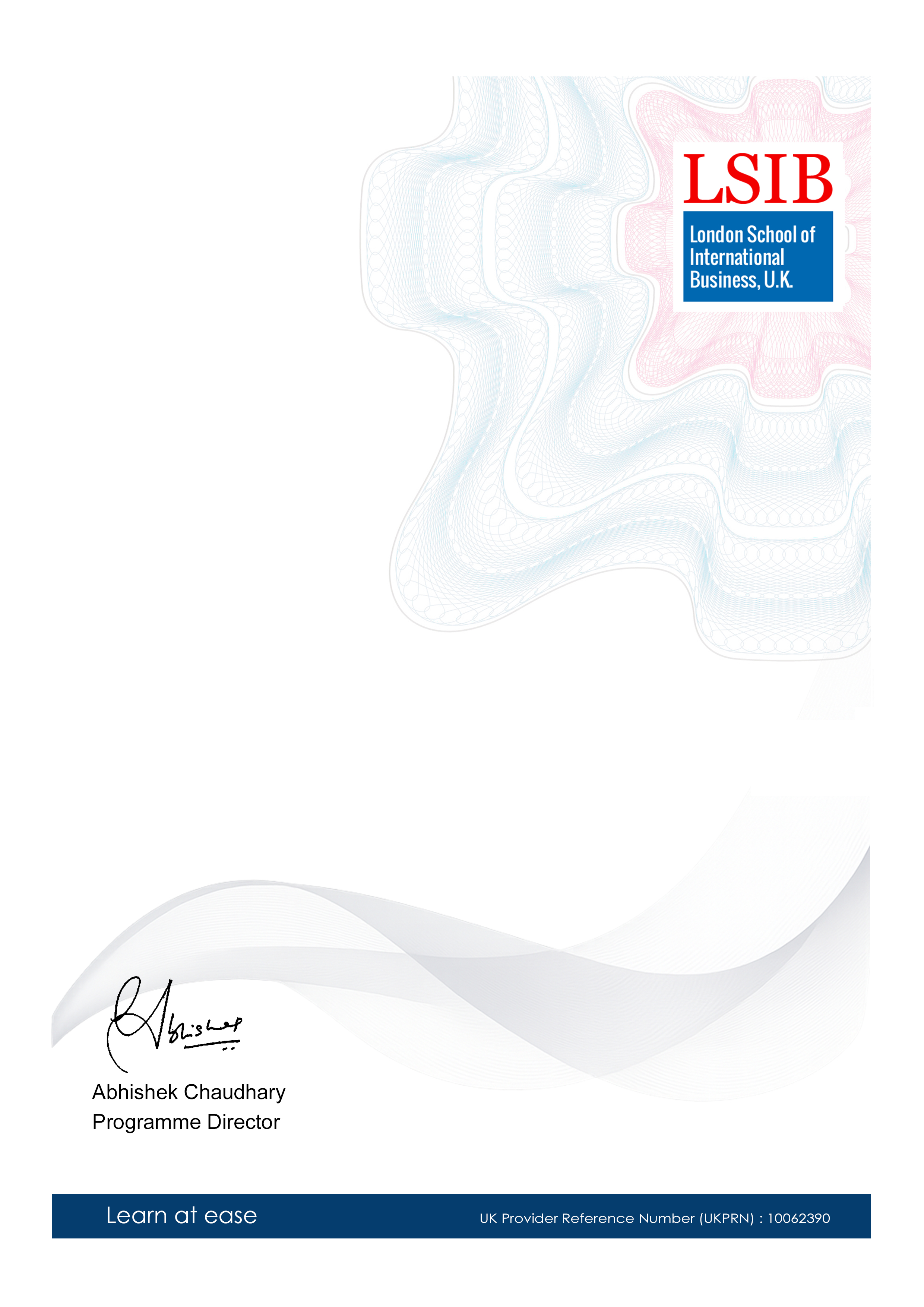
POSTGRADUATE CERTIFICATE IN WATER POLLUTION AWARENESS FOR HUMANITARIAN AID WORKERS
is awarded to
Learner Name
who has completed a programme at
London School of International Business (LSIB)
Awarded on
05 May 2025
Blockchain Id: s-1-a-2-m-3-p-4-l-5-e
Add this credential to your LinkedIn profile, resume, or CV. Share it on social media and in your performance review.